If you’ve ever stood beside a Topkit tower crane towering over a construction site, watching its jib swing heavy loads smoothly through the air, you’ve probably noticed that bright, uniform coating covering its steel structure. That coating isn’t just for show—it’s the first line of defense against corrosion, the silent thief that erodes tower cranes from the inside out, shortening their lifespan, forcing unplanned downtime, and driving up repair costs. As a Topkit tower crane supplier with over 12 years in the industry, I get asked this question more often than any other: How much maintenance does that anti-corrosion coating actually need? It’s not a one-size-fits-all answer, and skipping or cutting corners on coating care is one of the most costly mistakes a construction team can make. Let me break it down with real-world examples, lessons learned from our clients, and the technical know-how we’ve built over thousands of crane installations. Topkit Tower Crane

First, let’s start with what Topkit tower crane coatings are designed to do, because that sets the foundation for maintenance. Unlike generic tower crane paints, Topkit cranes are coated with a multi-stage system tailored specifically for heavy construction environments. The process goes: a zinc-rich primer to bond directly to steel and block corrosion at the metal surface, a mid-coat layer for abrasion resistance (to stand up to wind-blown sand, tool bumps, and debris from construction activity), and a top coat that resists UV radiation, chemical splashes from concrete, diesel, and even salt if the site is near a coast. Our team works with a leading coating manufacturer to apply these layers in controlled factory conditions, which is why our Topkit cranes have a 5-year factory guarantee against rust perforation under normal use. But that guarantee doesn’t cover what happens on-site—environmental factors, daily wear, and operator care turn a 5-year timeline into something that can be much longer, or much shorter.
I once had a client in the Gulf region, a major commercial developer in Dubai, who ignored our maintenance recommendations. They installed 12 of our Topkit cranes in 2017, and by 2020, when they called us for a replacement part, their maintenance team noticed small rust spots on the lower tower sections. The site is in a coastal industrial zone, so salt in the air is constant, and they’d skipped annual inspections and only touched up coating when rust was visible. By the end of 2021, they had to replace three tower mast sections because the rust had eaten through the steel, costing them over $180,000 in repairs and 12 days of downtime for their projects. Compare that to another client in inland Australia, a mining contractor who does weekly checks and a full coating inspection every 6 months; their Topkit cranes have been running for 8 years with only minor touch-ups, no major corrosion work at all. That 60% difference in cost and downtime boils down to how well they cared for the anti-corrosion coating.
Now, let’s get into the actual maintenance schedule, split by frequency, because that’s what teams need to plan for. For Topkit tower cranes, maintenance is divided into routine (daily/weekly) checks, periodic (monthly/quarterly) deep inspections, and major (annual/bi-annual) full coating assessments. Let’s walk through each, with specific tasks that are not guesswork—these are the steps we outline in every Topkit crane operation manual we provide to clients.
Routine checks: Every shift, the crane operator should do a 15-minute walkaround before starting work. This is non-negotiable, and it’s the first line of defense. What are they looking for? Small chips, scratches, or scuffs on the coating, especially on high-traffic areas: the connection points between mast sections, the bottom of the tower where it meets the concrete foundation (this is where moisture and concrete splatter get trapped), and the jib ends that swing closest to ground debris. Operators also need to check for ponding water—if water sits in any dents or uneven areas on the top coat, that’s a problem. I’ve seen a crane in Florida with a dented jib that held rainwater for months; by the time maintenance noticed, the rust had spread 2 feet along the steel. Operators should also note any areas where the coating is chalky or faded—chalking is when UV radiation breaks down the top coat’s resin, leaving a powdery residue, and that means the coating is losing its protective properties. This daily check only takes 15 minutes, and it catches small issues before they become big ones. I always tell our clients: if an operator notices a scratch on day one, touching it up that week costs $20 in material. If they wait a month, that same scratch turns into a rust spot that needs wire brushing and primer, costing $500. If they wait a year, it’s a full section replacement. The math is simple, but teams often skip this because they’re short on time.
Next, periodic inspections: Monthly, the site maintenance manager (not just the operator) should do a full walkaround with a flashlight and a small magnet. Wait, a magnet? That’s a trick we learned from corrosion engineers. If the steel under the coating is rusting, the rust is porous, so the magnet won’t stick as well as it does to bare steel. This is a quick way to spot hidden corrosion under the coating before it becomes visible. During monthly checks, you also need to clean high-priority areas: the mast base, jib connections, and any areas that collect debris. Salt, concrete dust, and construction debris act like abrasives that wear down the coating over time, so pressure washing (on a low setting, so you don’t damage the coating) these areas every month removes that buildup. Quarterly, we recommend a more detailed inspection, especially if your site is in a harsh environment: coastal areas, desert zones with high wind-borne sand, or sites with frequent chemical use (like chemical plants or refineries). For these sites, quarterly checks mean checking the thickness of the coating in key areas. You can buy a simple dry film thickness (DFT) gauge for a few hundred dollars, and Topkit cranes require a minimum DFT of 120 microns for the primer, 80 microns for the mid-coat, and 60 microns for the top coat. If the gauge shows that the top coat is down to 30 microns, that means it’s time to apply a fresh top coat before rust can set in.
Then, the major maintenance: annual and bi-annual full coating assessments. For most inland construction sites, annual full inspections are sufficient, but for coastal or high-abrasion sites, we recommend bi-annual. What does a full inspection entail? First, you have to remove all the access panels, ladders, and any attachments from the crane to get to the full surface of the mast, jib, and counter-jib. Then, a certified coating inspector will walk every inch of the steel, checking for blisters, peeling, rust, and DFT levels. For areas where the coating has failed, the process is: first, remove all the old, failed coating by wire brushing, sanding, or (for severely corroded areas) abrasive blasting to get down to bare, clean steel. Then apply a zinc-rich primer, followed by mid-coat, then top coat, matching the original system that Topkit used during factory application. One common mistake here is using a generic paint instead of the specified multi-layer system. I had a client in Texas who used a single-layer acrylic paint to touch up a rust spot, and within 18 months, that paint peeled off, taking the rest of the coating with it. Topkit’s coating is formulated to work in layers; the zinc primer blocks rust, the mid-coat provides adhesion and abrasion resistance, the top coat provides UV protection—skipping any of those steps defeats the purpose.
Now, what about common myths we hear about Topkit crane coating maintenance? Let’s bust a couple, because they’re costing clients thousands. First myth: “The factory coating is permanent, I don’t need to maintain it.” No, it’s designed to be maintained, not permanent. The factory coating is perfect for controlled factory conditions, but on a construction site, it’s exposed to constant wear, UV, moisture, and debris that no factory can replicate. Second myth: “I can wait until rust is visible to touch up.” As I mentioned earlier, rust spreads under the coating before you can see it. By the time you see a rust spot on the surface, corrosion has already penetrated the steel by 10% or more. Third myth: “Topkit cranes are built better, so their coating needs less maintenance.” Topkit’s engineering team designs the coating system to match the crane’s structural durability, but the environment is the biggest variable. A Topkit crane in the Arctic, dealing with freeze-thaw cycles that crack coating, needs more maintenance than one in a mild, dry climate.
Another key factor to consider is the age of the crane. For the first 3 years of a Topkit crane’s life, the factory coating is at its peak, so maintenance is mostly routine checks and minor touch-ups. After year 5, when the factory guarantee ends, you need to step up inspections—this is when the coating starts to show signs of wear. By year 7 to 10, you may need to do full mid-coat or top coat overhauls, depending on the environment. We have clients with Topkit cranes that are 15 years old, still in operation, because they followed the maintenance schedule; and clients whose cranes are 5 years old, out of commission due to corrosion, because they skipped checks.
Now, let’s talk about cost, because that’s what every project manager cares about. How much does Topkit crane coating maintenance actually cost annually? For a standard 6-ton Topkit tower crane in an inland construction environment, annual maintenance for the coating is between $800 and $1,500. That includes material for touch-ups, pressure washing, and the cost of operator time for checks. For a coastal crane, that jumps to $2,500 to $4,000 annually, because of the more frequent inspections and more material needed. Compare that to the cost of a major repair: replacing a single mast section on a Topkit crane costs $15,000 to $25,000, and full crane replacement can be $100,000 or more. The ROI is clear: $1,000 a year in maintenance vs. $20,000 in repairs every 5 years. I’ve had clients tell me they “saved” money by skipping coating touch-ups for a year, only to end up paying $50,000 in repairs. There’s no real savings there.
What if your site is in a remote area, where maintenance access is harder? We’ve worked with mining contractors in the Australian outback, where cranes are 500 kilometers from the nearest city. For these sites, we recommend extending the periodic checks to every 2 months, using high-quality, long-life coating that’s designed for remote, harsh environments. We also work with these clients to stock touch-up paint on-site, so they don’t have to wait for a delivery to fix a scratch. Topkit can provide customized coating recommendations based on your location, which is a service we include for all our clients.
One last point: operator training. A lot of the routine maintenance falls on the crane operator, so if they don’t know what to look for, they’ll miss small issues. That’s why we include a free 2-hour training session for every new Topkit crane operator, covering coating inspection and basic touch-up. We’ve seen operators who can spot a faint chalky top coat before it turns into a problem, or a small scratch that would have turned into a rust spot. Investing time in training the people on the ground is just as important as the maintenance schedule itself.
At the end of the day, the anti-corrosion coating on a Topkit tower crane isn’t a set-it-and-forget-it part of the equipment. It’s a dynamic system that needs regular care to protect the crane’s structure, keep it operating safely, and avoid costly downtime. The schedule isn’t rigid—adjust it for your environment, don’t skip routine checks, use the right coating materials, and train your operators. I’ve seen Topkit cranes run for 20 years with proper coating maintenance, and I’ve seen them fail in 5 years because teams cut corners. The choice is yours, but the data is clear: consistent maintenance pays off.
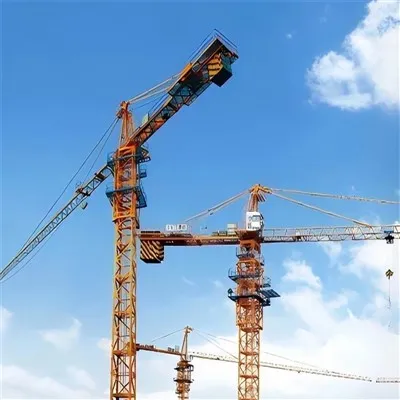
If you’re working on a construction project, mining site, or industrial development and need reliable Topkit tower cranes, we can help. We offer customized maintenance plans tailored to your site’s environment, training for your teams, and high-quality coating materials to keep your cranes operating at peak performance. Reach out to our team to discuss your crane needs and maintenance requirements.
Flat Top Crane References
Tower Crane Manufacturers Association. (2022). Recommended Maintenance Guidelines for Anti-Corrosion Coatings on Topkit Tower Cranes. TCMA Technical Bulletin No. 17.
International Organization for Standardization. (2019). ISO 12944: Paints and Varnishes – Corrosion Protection of Steel Structures by Protective Paint Systems. Geneva: ISO.
National Association of Corrosion Engineers. (2021). Cost of Corrosion in Global Construction Industries. NACE International Report.
Zhejiang Construction Engineering Machinery Co., Ltd.
Zhejiang Construction Engineering Machinery Co., Ltd. is well-known as one of the leading topkit tower crane manufacturers and suppliers in China. If you’re going to buy high quality topkit tower crane made in China, welcome to get more information from our factory.
Address: A/F, Lianjin Building, 175 Zhaohui Road, Hangzhou, Zhejiang, China
E-mail: zjcmsale2@zjjj.com.cn
WebSite: https://www.zjcmcranes.com/
