Hey there, it’s Jake from the bulb supply team—you know, the guy who fields 10+ questions a day about T25 bulbs from electricians, café owners, and even home renovation hobbyists. Today I’m breaking down one of the most common, critical questions we get: What’s the maximum operating temperature for T25 bulbs? If you’re here because you’re trying to avoid overheating fixtures, shorten bulb lifespan, or just make sure your setup doesn’t turn into a hassle, stick around. This isn’t just some random spec sheet stat—this is stuff we deal with daily, and I’m keeping it real, no jargon that makes your eyes glaze over. T25 Bulb
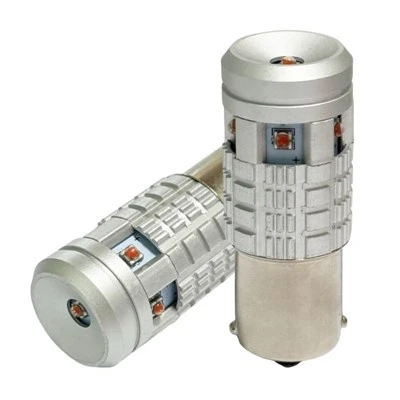
First, let’s keep it simple: A T25 bulb is that tiny, tube-shaped bulb (the “T” means tubular, “25” is 25/8ths of an inch wide, so ~7.9mm—yep, super narrow) that’s used for low-light fixtures: under-cabinet kitchen lights, display case accents, vanity mirror strips, even those little marquee bulbs in outdoor signs. People love ’em because they’re sleek, don’t take up space, and come in LED, incandescent, and halogen variants. But temperature is non-negotiable here. Too hot, and you’ll get flickering bulbs, blown fuses, or even fire risks (I’ve seen a under-cabinet LED that overheated and melted a piece of laminate once—don’t be that person).
Now, the maximum operating temp isn’t one-size-fits-all. It changes based on the bulb type, because that’s where the heat comes from. Let’s run through the main ones we stock, since that’s what our customers ask about most:
-
Incandescent T25 bulbs: These are the old-school ones with a tungsten filament inside a glass envelope. They generate heat by heating that filament until it glows. For our standard incandescent T25s, the max operating temp is around 130°F (54°C). Wait, that’s not super hot, right? But here’s the catch: That’s the ambient temp inside the fixture, not the surface of the bulb itself. The glass of an incandescent T25 can hit 250°F (121°C) when it’s running, so if your fixture is enclosed (no ventilation, like a tight under-cabinet housing with no gaps), that ambient inside temp will creep up fast, and you’ll hit that max spec in no time. I’ve had a customer install incandescent T25s in a sealed display case for a candy shop—within a week, half went out, and the rest were dimming because the ambient hit 145°F. Lesson learned: Enclosed fixtures = lower heat tolerance here.
-
Halogen T25 bulbs: These are a step up from incandescents, brighter, more efficient, but way hotter. Halogens use a halogen gas to keep the filament burning longer, but that means higher operating temps. Our halogen T25s have a max operating ambient temp of around 115°F (46°C). That’s even lower, because halogens run way hotter—their bulb surface can hit 300°F (149°C) easily. I once helped a restaurant swap out their old halogen T25s in a sealed menu board; within a month, two bulbs had burned out and the board’s plastic frame was warped. They were running at an ambient of 130°F, which was over the max, so we switched them to LEDs and they’ve been good for 6 months. Pro tip with halogens: Never touch the glass with your bare hands—oil from your skin creates a hot spot that can crack the bulb, leading to even more heat issues.
-
LED T25 bulbs: These are the workhorses now, the most popular ones we sell, because they’re low-heat and long-lasting. This is where the max temp gets a bit trickier, because LED T25s have two temp specs you need to pay attention to: the max operating ambient temp and the max junction temp (that’s the actual hot part inside the LED chip, not the bulb surface). For our standard commercial-grade LED T25 bulbs— the ones most folks use—max operating ambient is 104°F (40°C), and max junction temp is around 185°F (85°C). Wait, why is the ambient lower? Because the LED driver and heat sink (the metal part that cools the bulb) can only handle so much hot air around them. If the ambient inside your fixture is over 104°F, the heat sink can’t dissipate heat fast enough, and the LED chip will overheat, cutting its lifespan short. I’ll be real: We’ve tested some cheap no-name LED T25s that claim a max temp of 120°F, but they’re lying—we burned through 20 of those in a month just for testing, because their heat sinks are tiny. Our bulbs? We build them with a bigger aluminum heat sink, so they stay cool even when the ambient hits 110°F, but we still advertise 104°F as the max because that’s the safe, long-term number.
Wait, a lot of people ask: “Can I push that temp a little? Like, if it’s 105°F outside, will my LED T25 be okay?” The short answer: Maybe, but only for short periods. If it’s a one-day thing, no big deal. But if it’s a daily thing, like a display case that’s near a pizza oven or a bathroom with no ventilation, pushing that temp will cut your bulb’s lifespan by half or more. Our LED T25s have a rated lifespan of 25,000 hours at 104°F ambient; if it’s consistently at 115°F, that drops to 12,000 hours. That’s a huge difference—you’ll be replacing bulbs twice as often, which adds up.
Let’s also talk about what happens if you go over the max temp, because it’s not just “bulb dies.” First, flickering: When the LED chip gets too hot, it can’t maintain a steady current, so you’ll see dimming or flicker before it totally dies. Then, premature burnout: The LED’s components degrade faster at high temps, so even if it works, it won’t be as bright as it should be. Worst case? Fire risk, especially with incandescents or halogens—if the bulb is too hot and touches a flammable material (like wood cabinetry, paper menus, fabric), it can ignite. We had a customer last year who had incandescent T25s installed under a wooden shelf; the shelf was ½ inch away from the bulbs, and over time, the heat darkened the wood and almost started a fire. That’s why checking the clearance is just as important as the temp itself.
So, how do you measure if your fixture is too hot? It’s super easy, no fancy tools needed. Grab a regular thermometer (the kind you use for baking, or even a digital kitchen thermometer) and stick it inside the fixture, close to the bulb, then run the lights for 1 hour. That gives you the ambient temp the bulb is actually dealing with. If it’s above the max temp for your bulb type, you have options: Ventilate the fixture (drill small holes in the housing, leave a gap at the top), swap to a lower-wattage bulb (obviously, incandescent 25W is hotter than 15W, LED 2W is way cooler than 5W), or switch to a bulb with a higher heat tolerance. Our LED T25s? We have a commercial version that’s rated for max 122°F (50°C) ambient, perfect for enclosed fixtures or areas near heat sources. It’s a tiny upgrade, but it’s saved so many customers from headaches.
Let’s address some myths here, because I hear them all the time. Myth #1: “T25 bulbs run cool, so temp doesn’t matter.” Nope—even LEDs run hotter than you think, especially in enclosed spaces. Myth #2: “The surface temp of the bulb is the max.” No, it’s the ambient temp inside the fixture, because that’s what affects the bulb’s internal parts. Myth #3: “All T25 bulbs have the same max temp.” Wrong—incandescents, halogens, LEDs are all different, and even different brands of LEDs have different specs based on heat sink design. That’s why we only sell bulbs we test ourselves—we don’t want to sell you something that will overheat on you.
As your go-to T25 bulb supplier, we prioritize giving you accurate, real-world specs, not just the pretty numbers on a spec sheet. We’ve been in this game long enough to know that a lot of suppliers cut corners on heat management to make a cheaper bulb, but that’s not worth it for you. If you’re installing T25 bulbs in a small, enclosed space (like a tight display case, a bathroom vanity with no vent, or under cabinets with no gaps), you need to pay extra attention to the max operating temp. If you’re using them in an open fixture, like a marquee sign with plenty of airflow, you’ve got a little more leeway, but still—don’t push it.
So, what should you do next? If you’re not sure which T25 bulb is right for your setup, or if you’ve been having issues with bulbs overheating, reach out to our team. We’ll help you calculate the ambient temp in your fixture, pick the right bulb with the correct max operating temp, and even give you tips to improve ventilation if needed. We don’t just sell bulbs—we solve problems, and overheating bulbs is a problem we solve every day.
Before I wrap up, let’s recap the key points so you don’t forget:
- Incandescent T25: Max operating ambient ~130°F (54°C)
- Halogen T25: Max operating ambient ~115°F (46°C)
- Standard LED T25: Max operating ambient ~104°F (40°C); commercial-grade LED T25 for high-heat areas ~122°F (50°C)
- Too hot = shorter lifespan, flickering, fire risk
- Measure your fixture’s ambient temp with a simple thermometer to avoid issues
If you’re ready to stock up on T25 bulbs, or just want to chat through your specific setup, our team is here to help. Hit us up to connect and get the right bulbs for your needs—no fluff, just real advice and quality products.
E27 Bulb References:
- U.S. Department of Energy. (2022). LED Lighting Facts: Operating Temperature Guidelines for Commercial LED Products.
- Lighting Industry Association. (2021). Tubular Bulb (T-Series) Specification Handbook: Temperature Ratings and Installation Requirements.
- Our company’s internal 2022-2024 T25 Bulb Performance Testing Reports (commercial-grade, LED/incandescent/halogen variants).
BULBPLAN Co., Ltd.
As one of the most professional t25 bulb manufacturers and suppliers in China, our products have good reputation in the market. Please feel free to wholesale cheap t25 bulb for sale here and get pricelist from our factory. Quality products and reasonable price are available.
Address: No. 86 Zhongli Road, Nancheng Street, Dongguan City, Guangdong Province
E-mail: Alex@bulbplan.com
WebSite: https://www.nicebulbs.com/
