As a supplier of industrial diesel generator sets, I often encounter questions from customers about exhaust emission standards. These standards are not only crucial for environmental protection but also play a significant role in the legal compliance and market competitiveness of our products. In this blog, I will delve into the details of the exhaust emission standards for industrial diesel generator sets, providing you with a comprehensive understanding of this important topic. Industrial Diesel Generator Set

Understanding Exhaust Emissions from Industrial Diesel Generator Sets
Before we discuss the emission standards, it’s essential to understand what exhaust emissions are and why they matter. Industrial diesel generator sets burn diesel fuel to generate electricity. During this combustion process, various pollutants are released into the atmosphere. The main pollutants include particulate matter (PM), nitrogen oxides (NOx), carbon monoxide (CO), and hydrocarbons (HC).
Particulate matter consists of tiny solid or liquid particles that can be inhaled deep into the lungs, causing respiratory problems and other health issues. Nitrogen oxides contribute to the formation of smog and acid rain, and they can also have adverse effects on human health, such as irritating the respiratory system. Carbon monoxide is a colorless, odorless gas that can be toxic to humans, reducing the oxygen-carrying capacity of the blood. Hydrocarbons are volatile organic compounds that can react with nitrogen oxides in the presence of sunlight to form ground-level ozone, which is a major component of smog.
Global Exhaust Emission Standards
Different countries and regions have established their own exhaust emission standards for industrial diesel generator sets. These standards are designed to limit the amount of pollutants that can be emitted by these generators, thereby reducing their impact on the environment and human health.
United States
In the United States, the Environmental Protection Agency (EPA) has set strict emission standards for diesel engines, including those used in industrial generator sets. The EPA’s standards are divided into different tiers, with each tier representing a more stringent level of emission control. For example, Tier 4 Final standards, which came into effect in 2015, require significant reductions in PM and NOx emissions compared to previous tiers. These standards apply to new diesel engines with a power output of 19 kW or more.
To meet these standards, industrial diesel generator sets often need to be equipped with advanced emission control technologies, such as diesel particulate filters (DPF) to reduce PM emissions and selective catalytic reduction (SCR) systems to reduce NOx emissions.
European Union
The European Union (EU) also has its own emission standards for diesel engines, known as the Euro standards. These standards are similar to the EPA’s standards in that they are divided into different stages, with each stage becoming more stringent over time. The current Euro VI standards, which apply to new diesel engines since 2014, require substantial reductions in PM, NOx, CO, and HC emissions.
Like in the United States, European industrial diesel generator sets need to incorporate advanced emission control technologies to comply with these standards. For example, SCR systems are commonly used to reduce NOx emissions, while DPFs are used to capture and reduce PM emissions.
China
In China, the Ministry of Ecology and Environment has established emission standards for diesel engines, including those used in industrial generator sets. The current China IV standards, which are similar to the Euro IV standards, require significant reductions in PM and NOx emissions compared to previous standards. China is also in the process of implementing more stringent China V and China VI standards, which will further reduce emissions.
Chinese industrial diesel generator sets need to meet these standards to be sold in the domestic market. Manufacturers are required to develop and implement emission control technologies to ensure compliance.
Impact of Emission Standards on Industrial Diesel Generator Sets
The implementation of exhaust emission standards has a significant impact on the design, manufacturing, and operation of industrial diesel generator sets.
Design and Manufacturing
To meet the emission standards, manufacturers need to invest in research and development to develop advanced emission control technologies. This may involve modifying the engine design, such as optimizing the combustion process to reduce emissions, or adding after-treatment systems, such as DPFs and SCR systems.
These technologies not only increase the cost of manufacturing but also require more complex engineering and integration. For example, SCR systems need to be carefully calibrated to ensure efficient reduction of NOx emissions, and DPFs need to be designed to withstand high temperatures and pressures.
Operation and Maintenance
Industrial diesel generator sets that are equipped with emission control technologies also require more careful operation and maintenance. For example, DPFs need to be periodically regenerated to remove the accumulated particulate matter, and SCR systems need to be refilled with urea solution, which is used as a reducing agent to convert NOx into nitrogen and water.
Failure to properly operate and maintain these emission control technologies can lead to increased emissions and potential damage to the engine. Therefore, operators need to be trained on the proper use and maintenance of these systems.
Benefits of Complying with Emission Standards
Despite the challenges and costs associated with complying with emission standards, there are also significant benefits for both the environment and the users of industrial diesel generator sets.
Environmental Benefits
By reducing the emissions of pollutants such as PM, NOx, CO, and HC, industrial diesel generator sets that comply with emission standards help to improve air quality and reduce the impact on the environment. This can lead to a reduction in the incidence of respiratory diseases and other health problems, as well as a decrease in the formation of smog and acid rain.
Market Competitiveness
In many countries and regions, compliance with emission standards is a legal requirement for the sale and operation of industrial diesel generator sets. Therefore, manufacturers that can produce generator sets that meet these standards have a competitive advantage in the market. Additionally, some customers may prefer to purchase generator sets that are environmentally friendly, which can further enhance the marketability of compliant products.
How Our Company Meets Exhaust Emission Standards
As a supplier of industrial diesel generator sets, we are committed to producing high-quality products that meet the strictest exhaust emission standards. We have a team of experienced engineers and technicians who are dedicated to research and development, ensuring that our generator sets are equipped with the latest emission control technologies.
We work closely with leading engine manufacturers and suppliers of emission control systems to ensure that our products are designed and manufactured to meet the specific requirements of different markets. For example, for the US market, our generator sets are designed to meet the EPA’s Tier 4 Final standards, and for the European market, they are designed to meet the Euro VI standards.
In addition to meeting the regulatory requirements, we also conduct regular testing and quality control to ensure that our products consistently meet or exceed the emission standards. We believe that by providing environmentally friendly and reliable generator sets, we can not only contribute to the protection of the environment but also provide our customers with a high-quality and cost-effective solution.
Conclusion
Exhaust emission standards for industrial diesel generator sets are an important aspect of environmental protection and legal compliance. Different countries and regions have established their own standards, which require significant reductions in the emissions of pollutants such as PM, NOx, CO, and HC. These standards have a significant impact on the design, manufacturing, and operation of industrial diesel generator sets, but they also bring benefits such as improved air quality and market competitiveness.
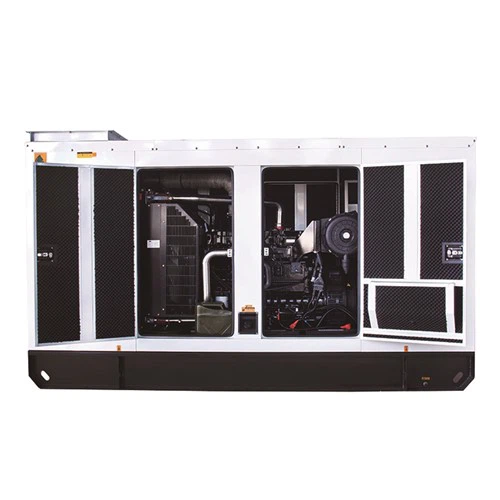
As a supplier of industrial diesel generator sets, we are committed to producing products that meet the strictest emission standards. We believe that by providing environmentally friendly and reliable generator sets, we can help our customers meet their power generation needs while also contributing to a sustainable future.
Industrial Diesel Generator Set If you are interested in purchasing an industrial diesel generator set, we invite you to contact us for more information. Our team of experts will be happy to assist you in selecting the right generator set for your specific requirements and provide you with detailed information on our products and services.
References
- U.S. Environmental Protection Agency. (2023). Diesel Engine Emission Standards.
- European Commission. (2023). Euro Emission Standards for Diesel Engines.
- Ministry of Ecology and Environment of the People’s Republic of China. (2023). Emission Standards for Diesel Engines in China.
Dianbida Power Equipment (Jiangsu) Co., Ltd.
We’re well-known as one of the leading industrial diesel generator set manufacturers and suppliers in China. We warmly welcome you to buy advanced industrial diesel generator set at competitive price from our factory. If you have any enquiry about pricelist and quotation, please feel free to email us.
Address: No. 23, Nanhuan Road, Jiangdu District, Yangzhou City, Jiangsu Province
E-mail: 19962469616@163.com
WebSite: https://www.js-dbdpower.com/
