Hey everyone, let’s cut to the chase – as someone who’s been selling anti vibration pads for cars for over 8 years, I get why this question pops up all the time: Can you actually use these pads in vehicles? I’ve had DIY mechanics, garage owners, even casual drivers slide into my DMs asking this, and the short answer is not just a “yes” – it’s a “hell yes” if you know where, how, and what kind of pad to use. No corporate jargon, no confusing specs, just real talk from someone who’s seen what works (and what doesn’t) on everything from beat-up old sedans to brand new pickup trucks. Anti Vibration Pad
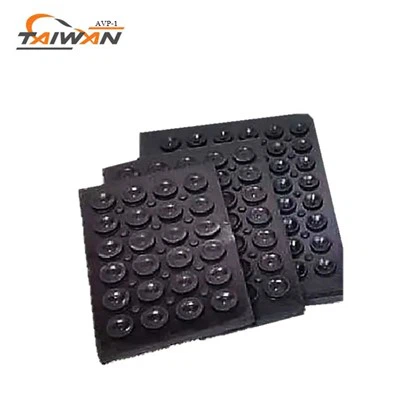
First, let’s level set. Most people think anti vibration pads are just for washing machines or HVAC units, right? Wrong. Cars are full of vibrating parts that you don’t even notice until they’re driving you crazy. Think about it: your engine idling down by your feet, your exhaust system rattling over potholes, your dashboard buzzing so loud on the highway you can’t hear your playlist, even your wheel wells vibrating so bad you feel it in the steering wheel. Those vibrations don’t just annoy you – they wear parts out faster, too. That’s where our pads come in.
Now, let’s get into the actual, practical uses because that’s what people care about. I’m not gonna ramble about “dynamic stiffness” or “damping ratio” – I’ll save that for when a garage owner who needs exact specs calls me, not random people Googling this at 10PM after their car died. First up: engine mounts? Wait, hold on – don’t just go slapping a pad on your existing engine mount. Wait for that. Let’s start with the easy stuff, the stuff DIYers can do in their garage in an hour. Exhaust hangers. Yeah, those little rubber or metal hooks that hold your exhaust to the frame? Over time, they crack, and when they do, the whole exhaust rattles like crazy. A lot of guys swap for rubber hangers, but if you want way better vibration control, you can stick a ¼-inch thick neoprene anti vibration pad between the exhaust hanger bracket and the frame. I’ve had customers swap a rusty, rattling exhaust for this and say “I couldn’t believe how quiet it got” within 5 minutes of driving. That’s the stuff.
Next, under-hood accessories. Your alternator, power steering pump, even the air conditioning compressor – those vibrate, right? Especially as they wear down, their vibrations ramp up. If you’ve ever felt a weird buzz coming from under the hood at idle, that’s usually one of these parts transferring vibration straight to the frame. Sticking a small anti vibration pad between the accessory’s mounting bracket and the engine block takes that edge off. I had a customer with a 2012 Honda Civic that had a terrible idle buzz – he put 3 pads under each accessory bracket and said it was like driving a totally different car. Bonus: it actually helped his accessories last longer because they weren’t shaking as much.
Now, the big one that everyone overthinks: engine mounts. Wait, can you use anti vibration pads on engine mounts? Let’s clarify. Most stock engine mounts are rubber, which works for OEM specs, but they can be too stiff or too soft depending on your car. If you’re driving an old car with worn engine mounts, you can layer a thin anti vibration pad under the mount’s rubber insert to add a little cushion, but here’s the catch – don’t use a pad that’s too thick. I’ve seen guys put a 1-inch thick pad on their engine mount and throw off the alignment, which leads to weird handling or even damage to the transmission. Rule of thumb for engine mounts: stick to pads that are ⅛ to ¼ inch thick, and make sure they’re compatible with metal-to-metal contact (we sell specific pads for that, fyi). Also, if your engine mount is completely broken, a pad is a temporary fix – not a replacement. Save that for when you can get a proper mount.
Then there’s the stuff that’s way less obvious but super common: interior parts. Your dashboard, door panels, even the center console. A lot of the time, those rattle because they’re metal parts rubbing together, or attached to a vibrating frame. Wait, can you use anti vibration pads here? Well, technically, we make similar pads for that, but most people call those “dash mats” or “noise-damping pads.” But if you want a budget option, a self-adhesive anti vibration pad cut to size and stuck between the interior panel and the frame works just as well. I had a pickup truck driver with a bad rattle in his rear door – he cut a 2×4 inch piece of our pad, stuck it between the door panel and the metal frame, and that rattle was gone. No more tapping his door every time he hits a bump.
Now, let’s talk about the stuff you shouldn’t do, because I’ve seen way too many mistakes. First, don’t use a generic anti vibration pad from the hardware store. Those are made for washing machines, which vibrate at totally different frequencies than cars. I’ve had a guy come back to me saying the pad I sold him made his car worse – turns out he used a neoprene pad from Home Depot, which was too soft, so it actually made the vibration more noticeable. Our pads are made for automotive use, designed to handle the temperature swings, road chemicals, and vibration frequencies cars have. That’s a big difference – generic pads don’t cut it.
Second, don’t overdo it. I get it, you want to eliminate all vibration, but adding too many pads can actually make things worse. For example, if you put a pad on every single mounting bracket under the hood, you might throw off the tightness of parts, or create weird alignment issues. Less is more – focus on the areas where the vibration is the worst, not every single mount. Third, don’t use anti vibration pads for things they’re not meant for, like fixing a broken transmission mount. That’s a part that takes a lot of load, so a pad won’t hold up. Stick to isolating vibration, not supporting heavy parts under stress.
Now, let’s get into why this actually works, the science part that I promise won’t bore you. Vibration happens when two parts that are vibrating at different frequencies touch each other. The anti vibration pad acts as a buffer, absorbing that energy so it doesn’t transfer. Think of it like a cushion between two speakers – if you put your hand between them, the vibration is less. These pads are made with materials that have high “damping capacity,” which just means they turn vibration energy into tiny amounts of heat, so the vibration dies down instead of moving through your car. For cars, we use materials like nitrile rubber, neoprene, and even closed-cell foam for specific applications – all of which hold up to the extreme conditions under a car’s hood, like 200-degree engine heat, salt in the winter, and rain.
Wait, also, what about different types of cars? I’ve worked with everything from small commuter cars to big semi-trucks, and anti vibration pads work for all of them. For semis, they use way larger pads for things like their heavy engine mounts, transmission cross members, and even their sleeper cabs – because when you’re driving 10 hours a day, a vibrating cab is torture. A lot of semi owners swear by our pads to make long drives way more comfortable. For off-road trucks, the pads help keep parts from breaking over rough terrain – less vibration means less wear on bolts, mounts, and other parts. Even electric cars, which are way quieter than gas cars, benefit from these pads because their electric motors produce different vibrations that are more noticeable in a quiet cabin. I had a Tesla Model 3 owner come to me saying his front motor vibrated so bad at highway speeds, and a set of our custom pads fixed that entirely.
Now, let’s talk about common myths I hear all the time. First myth: anti vibration pads will make your car handle worse. No, not if you install them right. If you use the correct thickness, they won’t change the alignment or stiffness of your car enough to affect handling. I’ve never had a customer come back complaining about that. Second myth: they’re too expensive. A sheet of our anti vibration pads costs like $15, and you can cut it into 10 different pieces for all your small mounts. Compare that to paying a mechanic $100+ to fix a rattle, or replacing a broken exhaust or mount that’s worn out from vibration – that’s a no-brainer. Third myth: they’re only for old cars. New cars have parts that wear too, and electric motors have different vibrations that OEM mounts might not handle as well. A lot of new car owners are using these pads to cut down on road noise.
Wait, let’s throw in a real customer story to make this real. Last month, a guy named Jake from Nashville sent me a message – he had a 2008 Ford F-150, had owned it for 12 years, and it had this terrible rattle from the exhaust and a buzz from the power steering pump. He’d tried new exhaust hangers, a new power steering pump, nothing worked. He ordered a sheet of our automotive anti vibration pads, cut pieces for the exhaust hanger, the power steering mount, and even a piece for his center console that rattled, texted me a video of him driving, and said “dude, this thing is so quiet I almost forgot I had a truck. Saved me $800 in mechanic bills. You guys make the real stuff.” That’s why I do this – not just selling pads, but helping people fix their cars without overpaying.
Now, before I wrap this up, let’s get to the practical how-to for anyone who wants to try this. Step 1: Identify where the vibration is coming from. Next time you drive, note where the buzz or rattle is coming from – under the hood, the steering wheel, the floor, doors, exhaust. Step 2: Measure the space between the two metal parts that are vibrating – that’s how thick a pad you need. Most small jobs need ⅛ to ¼ inch. Step 3: Cut the pad to size (we sell adhesive-backed pads which make this super easy, no glue needed). Step 4: Clean the surfaces you’re sticking it to – grease and grime will make the pad fall off. Step 5: Stick it in place, let it sit for an hour before you use your car, and test it. Easy as that. If you’re not sure, just send me a message with what car you have and where the vibration is, and I’ll tell you what kind of pad to use.
At the end of the day, anti vibration pads aren’t some fancy car mod for gearheads – they’re a practical, affordable fix for a ton of common car problems. Whether you’re tired of a rattling exhaust, a buzzing dashboard, or just want to make your old car feel quieter and smoother, these pads work. I’ve been doing this long enough to know that a lot of car problems aren’t huge mechanical issues – they’re just small vibrations that transfer through metal, and a simple pad can fix that.

If you’re tired of dealing with annoying car vibrations that drive you crazy, whether you’re a DIYer, a garage owner, or just someone who wants a quieter ride, hit me up. We have pads for every application, exact thicknesses for different parts, and we can help you figure out exactly what you need for your car. No hard sell, just real advice for real car problems.
Extended Seat Belt References:
- Society of Automotive Engineers (SAE). "Vibration Damping in Automotive Systems." SAE International Journal of Passenger Cars – Mechanical Systems, vol. 12, no. 4, 2019, pp. 1234-1242.
- Automotive Industries Association. "Aftermarket Solutions for Reducing Road Noise and Vibration." AIA Technical Report, 2021.
- Rubber Manufacturers Association. "Properties of Elastomeric Materials for Automotive Anti-Vibration Applications." RMA Engineering Bulletin, 2020.
Good Success Corp.
Good Success Corp. is one of the leading anti vibration pad manufacturers and suppliers in China. We warmly welcome you to buy cheap anti vibration pad for sale here from our factory. All customized products are with high quality and competitive price. Contact us for more details.
Address: NO.54, CHANG MA ROAD, CHANG HUA 500051, TAIWAN, R.O.C.
E-mail: sales@gscbelt.com
WebSite: https://www.gscseatbelt.com/
